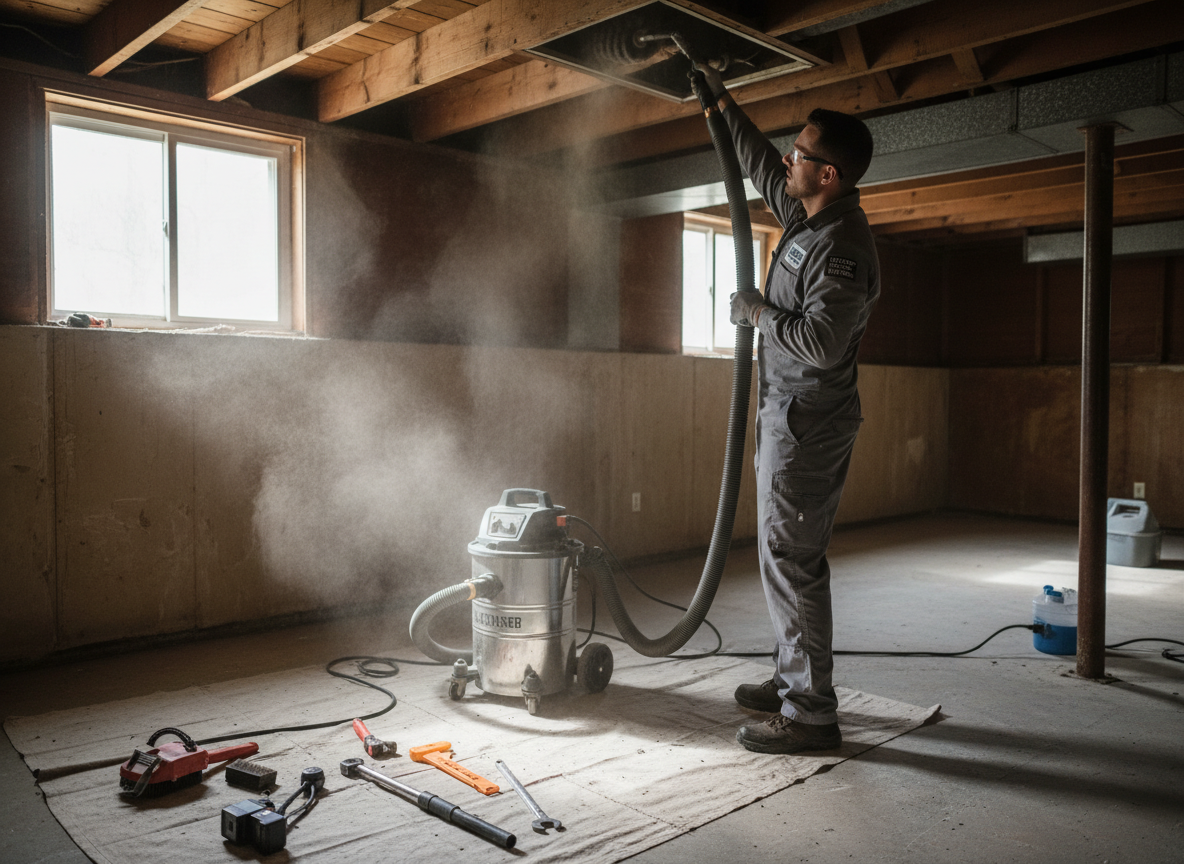
Gloucester City homes built before the 1970s often have rigid metal ducts routed through basements and crawl spaces that collect construction debris and insulation fibers over decades. In these older properties near the Delaware River, moisture from seasonal flooding and high summer humidity allows mold to form on interior duct surfaces, especially where joints were never sealed properly during original installation. Cleaning requires removing registers, using negative air machines to contain particles, and brushing each run without damaging the thin sheet metal common in row homes along Johnson Boulevard and surrounding blocks.
Camden County properties in Gloucester face extra dust load from nearby industrial zones and highway corridors that funnel pollen and road grit into attic intakes during spring and fall. Homeowners in these neighborhoods frequently notice uneven airflow after heavy rains because sediment settles in low horizontal runs under first floors. Technicians must map every branch before starting, then use HEPA filtration to prevent redistribution into living spaces during the vacuum phase.
After cleaning, technicians inspect for disconnected boots or crushed flex lines that are common in Gloucester's split-level homes where additions were added without updating the original trunk lines. Proper restoration includes resealing accessible joints with mastic and confirming static pressure returns to normal levels before leaving the site.
Technician insight
In Gloucester, the thing that catches most people out with air duct cleaning is how many pre-1960 row homes along the river have ducts that drop into dirt crawl spaces where moisture from high water tables packs fine silt into the bottom of the runs; you cannot just vacuum from the registers or the material stays put.
Gloucester City split-level with poor airflow
Homeowner reported weak air from upstairs vents after a wet spring. Inspection found compacted dust and river sediment in the main trunk under the addition. Crew isolated the system, brushed and vacuumed all lines, then resealed two disconnected boots. Airflow returned to normal and no further settling occurred after the next rain.
How it works
- 1
Initial Assessment
Walk through the Gloucester City home to locate all supply and return runs and note any visible damage or moisture signs.
- 2
System Isolation
Seal off the HVAC equipment and cover registers to contain debris during the cleaning process.
- 3
Mechanical Cleaning
Use rotary brushes and compressed air tools to dislodge buildup while the vacuum system pulls material out of the ducts.
- 4
Final Inspection
Check each section with cameras, confirm airflow balance, and document before-and-after conditions for the homeowner.
Pricing
Cost depends on number of runs, access difficulty in older Gloucester housing stock, and whether dryer vent cleaning is added; upfront quotes provided on site.