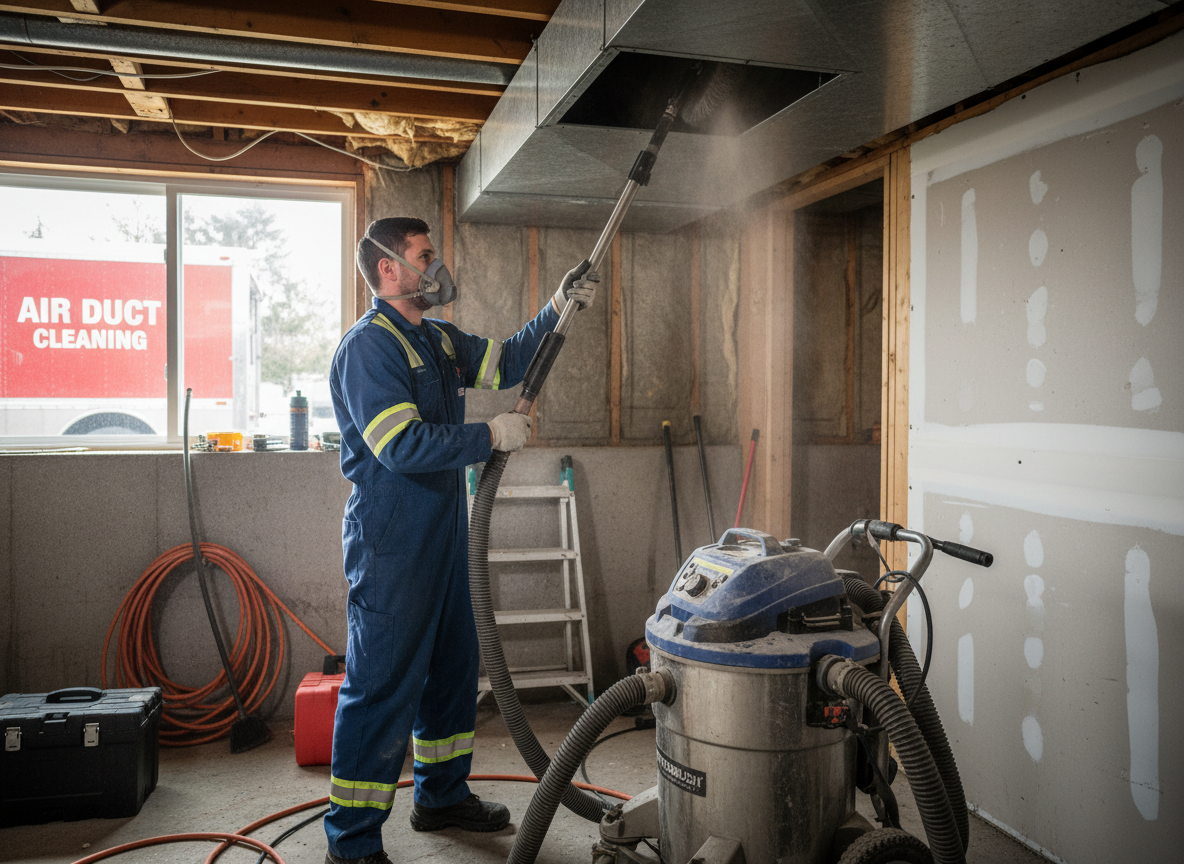
Gloucester City neighborhoods like Highland Park and the blocks near the Delaware River feature many homes built before 1960 with original galvanized duct runs that collect fine silt from nearby industrial corridors. These systems often have limited access points behind plaster walls or under low basement ceilings, requiring technicians to work with mirrors and flexible rods rather than full vacuum trucks. Seasonal humidity spikes in late summer push mold growth inside the return plenums, especially where condensation lines drain poorly onto concrete floors.
Twenty-four-hour service becomes essential after basement flooding or when a clogged filter forces the furnace to overheat during a cold snap. Crews at Uplift Pulse start by mapping every branch run from the 100 N Johnson Blvd shop, then isolate sections so negative pressure does not pull debris into living spaces. Older gravity furnaces still found on some streets demand slower airflow rates to avoid collapsing thin metal elbows that newer high-velocity equipment would damage.
Homeowners frequently overlook the short horizontal runs that connect second-floor bedrooms to the main trunk; these lines trap pet dander and insulation fibers that recirculate for years. Proper cleaning here means removing the register boots, vacuuming the short elbows, and reinstalling with new foil tape rather than relying on the original pressed seams. Gloucester’s narrow lots also mean equipment must be staged on the street, so every job includes traffic cones and neighbor notifications before work begins.
Technician insight
In Gloucester the thing that catches most people out with 24/7 Air Duct Cleaning is the short, sharp 90-degree elbows behind bedroom registers in pre-war row homes. Those turns trap debris that standard truck-mounted vacuums never reach, and forcing air through them can collapse the old metal. We always pull the boots first.
Clogged returns after basement dampness
A Gloucester City homeowner called after noticing weak airflow and a musty smell following heavy rain. Inspection revealed silt and mold in the main return trunk under the first-floor hallway. Crews isolated the line, extracted the debris through the exterior vent, and cleaned the short elbows feeding the upstairs bedrooms.
How it works
- 1
Initial Assessment
Technician arrives, inspects every accessible register and the main trunk from the furnace or air handler, and notes any collapsed sections or moisture stains typical in Gloucester basements.
- 2
Isolation and Containment
Registers are sealed, negative-air machines are positioned at exterior vents, and plastic sheeting protects floors in tight row-home layouts.
- 3
Agitation and Extraction
Rotating brushes and compressed-air whips loosen debris while the vacuum pulls material out through the main trunk; short branch runs receive extra passes.
- 4
Final Inspection and Reassembly
Every boot and elbow is checked with a mirror and flashlight, new tape is applied where needed, and the system is returned to normal operation.
Pricing
Cost depends on number of runs, access difficulty, and whether the home has a finished basement or low crawlspace.