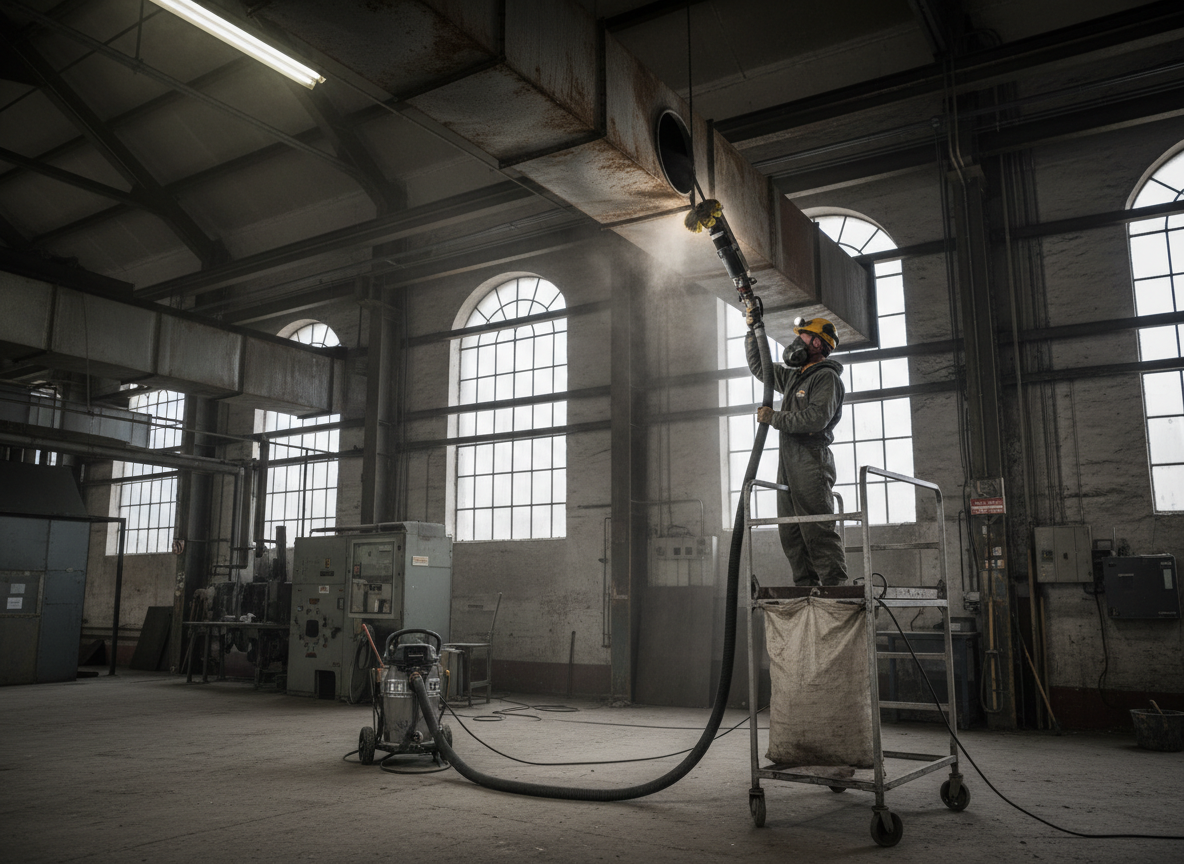
Industrial air duct cleaning in Gloucester requires handling large-diameter trunk lines and multiple branch runs common in older manufacturing buildings near the Delaware River. These systems often accumulate grease, metal shavings, and fine particulates from production processes that standard residential equipment cannot remove. Technicians must isolate sections, maintain negative pressure throughout the run, and use truck-mounted vacuums rated for high static pressure to avoid collapsing lightweight ductwork installed decades ago. Access panels may be limited in Gloucester City plants, so crews frequently cut temporary openings that are then sealed to code. Weather adds another layer: summer humidity promotes microbial growth inside uninsulated ducts while winter temperature swings cause condensation that binds dust into hard layers along the bottom of horizontal runs.
Facilities in Gloucester and surrounding townships frequently operate 24-hour shifts, which limits downtime windows for cleaning. Crews coordinate with maintenance staff to shut down air handlers only during brief changeovers, then work in parallel on return and supply sides to finish before production resumes. Older galvanized duct in these buildings can have corroded seams that leak during cleaning if not braced properly. Technicians also check for asbestos-wrapped insulation around elbows and transitions, a common finding in Gloucester industrial stock built before the 1980s. Proper containment and HEPA filtration protect both workers and adjacent occupied spaces during the process.
Post-clean verification includes airflow measurements at multiple registers and visual inspection with borescopes to confirm debris removal from turning vanes and coils. In Gloucester facilities, residual odors from prior processes can linger if the cleaning does not reach the far ends of long exhaust runs. Final reports document pre- and post-static pressure readings so facility managers can track efficiency gains. Crews also note any damaged dampers or missing insulation that should be addressed before the system returns to full operation.
Technician insight
In Gloucester, the thing that catches most people out with Industrial air duct cleaning is the combination of older waterfront buildings and high humidity that turns normal dust into a concrete-like layer along the bottom of long horizontal runs; if you do not brace the seams before agitation you will create new leaks that were not there before.
Gloucester Manufacturing Plant
A production facility reported uneven airflow across several assembly lines. Inspection showed thick grease and metal particulate packed in the main return trunk installed in the 1970s. Crews isolated the line during a shift change, used high-static truck vacuums with custom brushes, and restored full airflow before the next production cycle began.
How it works
- 1
Site Assessment
Map all accessible trunk lines, note access points, and identify isolation points in the Gloucester facility.
- 2
System Isolation
Seal off sections and set up negative air machines to prevent cross-contamination during cleaning.
- 3
Mechanical Agitation
Use rotating brushes and compressed air whips sized for industrial diameters to dislodge buildup.
- 4
Extraction and Verification
Pull debris with high-capacity vacuums and confirm results with borescope inspection before restoring airflow.
Pricing
Pricing depends on system size, number of access points required, and whether production downtime restrictions apply.