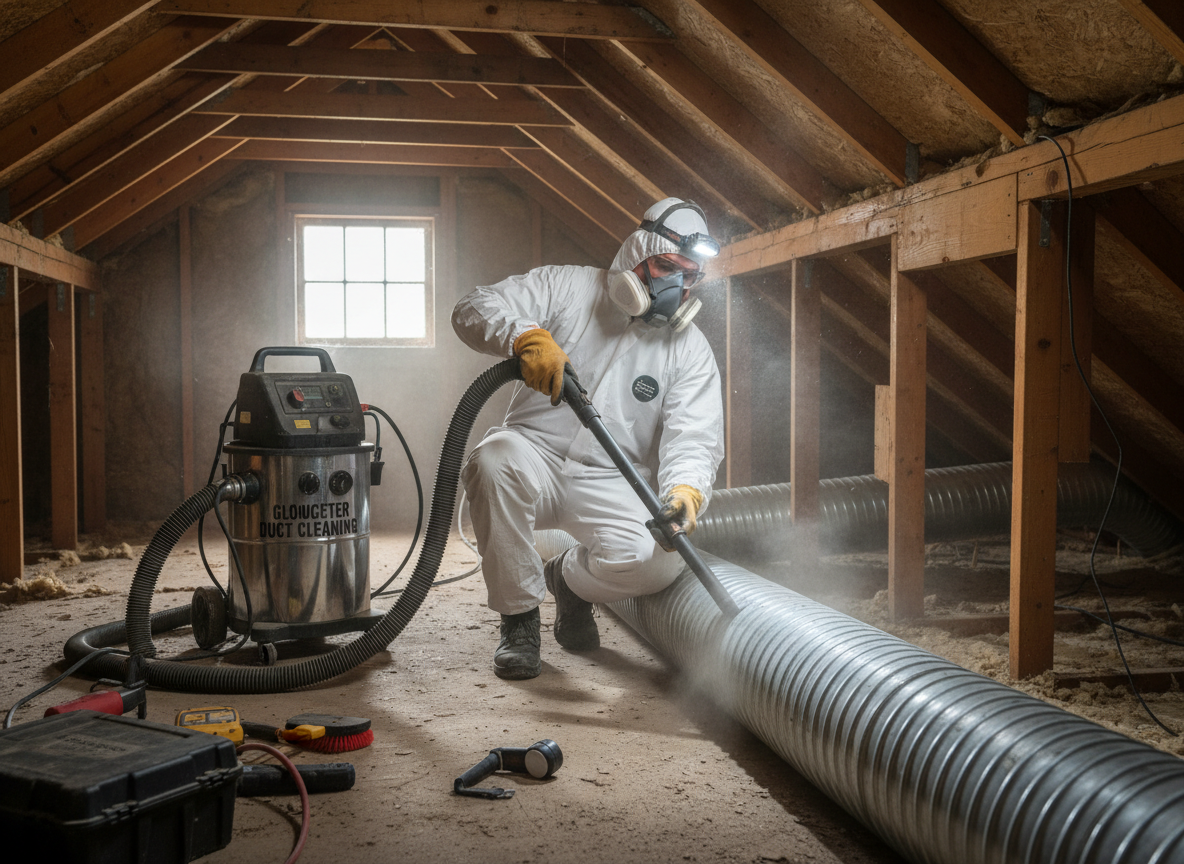
Attic duct cleaning in Gloucester City requires working around tight knee walls and low-clearance trusses common in homes built before 1970. Technicians pull registers, seal the system, and use negative-pressure equipment to pull debris out without disturbing insulation layers that often sit directly on ductwork. Older flex runs frequently show collapsed sections or rodent damage that must be addressed before the cleaning can finish.
Gloucester’s humid summers push moisture into unconditioned attic spaces, where it mixes with dust on metal ducts and creates a breeding ground for mold along seams and joints. Crews inspect for these conditions first, then apply targeted agitation tools that reach branch lines feeding second-floor rooms without cutting into finished ceilings below.
Because Gloucester sits near the Delaware River, many neighborhoods experience higher groundwater levels that increase attic humidity during spring thaws. This makes thorough drying after cleaning essential to prevent future microbial growth, especially on ducts that run through vented soffits exposed to river breezes.
Handling Collapsed Flex Duct in Gloucester Attics
Older Gloucester homes often have flexible duct that sags between joists after insulation settles. Crews locate these sections by feel during the initial inspection, then recommend targeted replacement rather than cleaning alone so airflow is restored without pushing debris further downstream.
Technician insight
In Gloucester, the thing that catches most people out with attic duct cleaning is how many homes in the older blocks around Johnson Boulevard still have original flex duct lying directly on blown-in insulation that has settled and blocked the bottom of the runs, so you cannot just vacuum—you have to lift and support the ducts first or the debris never moves.
Collapsed duct near the main trunk
Homeowner noticed weak airflow on the second floor of a Gloucester City row house. We found a flex run crushed under settled insulation and packed with fine river silt. After isolating the system we vacuumed the remaining lines, replaced the crushed section with rigid duct, and restored full airflow to the bedrooms.
How it works
- 1
Initial Access and Inspection
Technicians enter the attic from the exterior hatch or scuttle, map all visible duct runs, and note any damaged sections or insulation issues before equipment setup.
- 2
System Isolation and Sealing
Registers are removed and the HVAC system is sealed at the air handler to create a closed loop that prevents dust from migrating into living spaces during cleaning.
- 3
Negative Pressure and Agitation
A vacuum is attached at the main trunk while whips and brushes dislodge debris from branch lines, pulling material out through the collection point.
- 4
Final Walk-Through and Airflow Check
After cleaning, registers are reinstalled and airflow is tested at each vent to confirm improved performance before leaving the job.
Pricing
Cost depends on attic access difficulty, total linear feet of duct, and whether sections need replacement; upfront quotes provided after inspection.