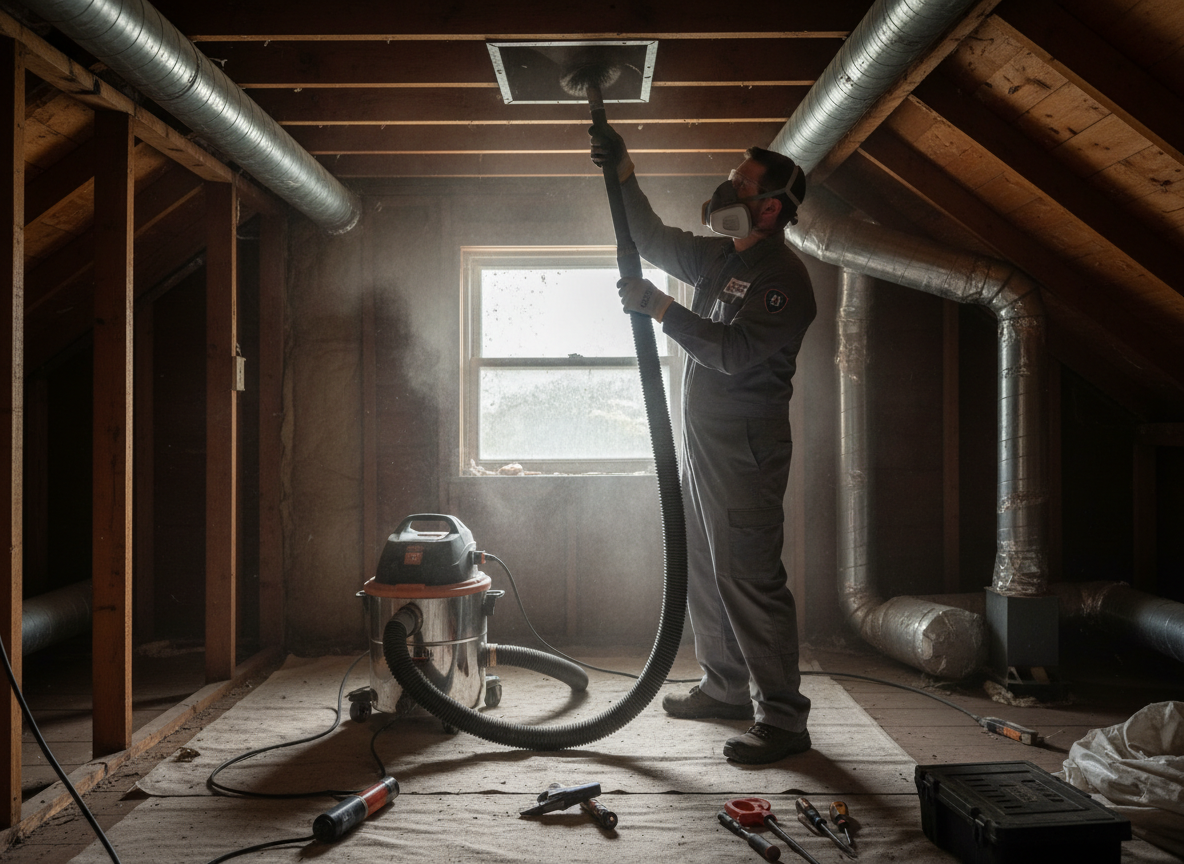
Gloucester City homes built before 1970 often have original sheet-metal ducts that collect pollen from the nearby Delaware River and fine dust from the surrounding industrial corridors. When these ducts are not cleaned properly, residents experience persistent allergy symptoms even after changing filters. Our process uses negative-air machines sized for the narrow runs common in row homes and Cape Cods along N Johnson Boulevard and Klemm Avenue.
High summer humidity in the Gloucester area encourages mold growth inside return plenums located in damp basements. We inspect for moisture stains and soft insulation before any brushing begins. Skipping this step can spread spores through the system and worsen symptoms for sensitive family members.
We also address the common mistake of sealing only the supply registers while leaving return paths untouched. In Gloucester Township split-levels this leaves the main living areas recirculating unfiltered air from the crawl space. Full-system access through the existing trunk lines prevents that shortcut and keeps the job contained to one visit.
Technician insight
In Gloucester the thing that catches most people out with air duct cleaning for allergies is the narrow, low-clearance returns tucked behind 1950s knotty-pine paneling in row homes along Johnson Boulevard. Homeowners assume a quick register vacuum is enough, but those hidden elbows trap river pollen and never get touched until the system is opened from the basement.
Persistent spring allergies in a Gloucester City row home
A family on Klemm Avenue kept waking with congestion despite new filters. We found thick pollen crust inside the return chase that ran behind finished basement walls. After opening two access panels and running full negative-air extraction, the ducts tested clear and the homeowners reported noticeably easier breathing within two days.
How it works
- 1
Initial Walk-Through
We map every register and return in the Gloucester home, noting access points and any visible moisture or rodent signs before equipment enters.
- 2
Negative-Air Setup
A HEPA-filtered vacuum is connected at the main trunk and run at full volume to contain debris while we work through each branch.
- 3
Agitation and Extraction
Rotating brushes and compressed-air whips loosen buildup; all material is pulled directly into the vacuum rather than pushed into living spaces.
- 4
Final Inspection and Filter Check
We verify every run is clear, then confirm the homeowner’s existing filter is the correct MERV rating for Gloucester pollen loads.
Pricing
Cost depends on number of runs, access difficulty in older Gloucester homes, and whether insulation replacement is needed. Upfront quote given on site.